“the habits of a vigorous mind are formed in contending with difficulties. Great necessities call out great virtues.”
I’m learning that I have a deep fascination, and admiring respect for, Lincoln. He was determined to leave his mark on this world while dealing with a meloncholy (some have said outright clinically depressed) demeanor. He was cheerful once you talked with him for a few minutes. He was infinitely patient with everyone but himself, and he was a damn good storyteller, often weaponizing it to cool down a room or bring people over to his side.
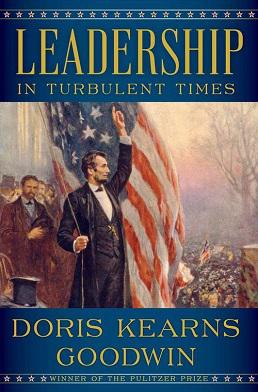
And yet, he’s only one of four leaders in Leadership in Turbulent Times. The cover says it all. Doris tracks four American presidents (Lincoln, Teddy Roosevelt, FDR, and LBJ) through their life and career, framing each in their own Hero’s Journey, complete with their initial downfall and eventual rise to their spot in history. I love memoirs and I know this isn’t a memoir but I got to learn so much about each president. It’s like getting four great stories in a single book.
I learned how it took a visit to squalid, impoverished tenement neighborhoods in New York City to open Teddy’s eyes to “the other half” and awoke in him a drive to create a better country for everyone. You’ve no doubt heard of Teddy’s rough riders but his two-year stint as president of the NYC police board is an amazing collection of rooting out lazy cops, improving the good ones, and generally kicking ass and taking names.
I learned the dogged optimism of FDR and what it truly means to be a servant to the public. He embraced new ideas, new technology - he simplified highly complex topics like national finance in his regular radio “fireside chats”. Imagine, talking to a few million strangers, explaining to them the ins-and-outs of how “money” works. People loved it.
I got to learn how LBJ saw a vision of America where everyone was given opportunity they deserved (I mean, “The Great Society”, come on!) and made the very, very hard choice to focus on moving domestic policy forward at the expense of his own legacy, something that he was never able to reconcile and, I think, a demon that sent him to an early grave.
And of course, I learned even more about my absolute favorite, Lincoln. He was never hesitant to take the time to sit down with a soldier, or a clerk, or anyone from the front lines, to hear what they had to say. I cannot emphasize enough how well he could understand the other person, relate to them, and help them see that the American civil war was so much bigger than just a series of battles.
These aren’t biographies. Biographies tend to get boring. These are stories. They’re stories of great people, of great leaders. More importantly, great leaders in pivotal times in American history. I think what would have happened if we had different leaders during those times (or god forbid, the kind of leaders we’ve had recently), and I’m grateful that we had those leaders. I often read materials of past leaders as a salve for the wound that is our current events but it isn’t all just therapy. These leaders have left us all with an example of what service looks like and how to behave under the worst of conditions. And we can all be better for having read their stories.