Aim to be a zero.
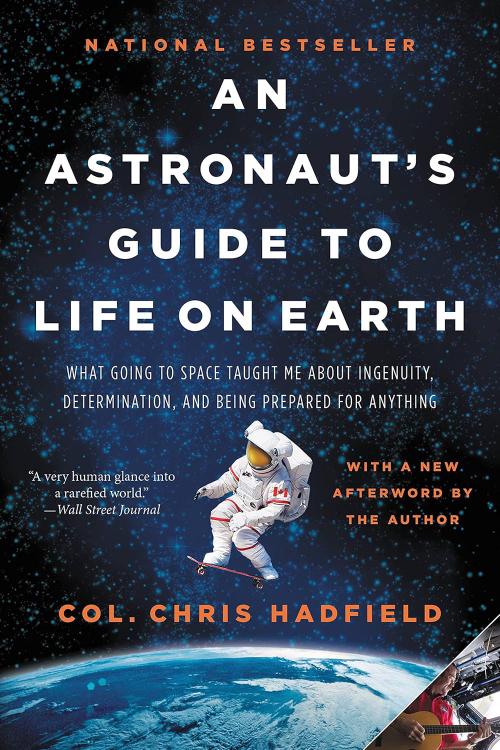
Colonel Chris Hadfield was the first Canadian commander of the International Space Station, and that’s the least interesting thing about him. Chris’s book of early inspiration from the first Moon landing to the hard work of what it takes to be an astronaut is a lesson in hard work and humility. Everything about Colonel Hadfield is hard work - a degree in engineering and another in aviation systems, training to be a test pilot, playing guitar effectively in space - everything takes capital ‘H’ Hard Work. I also learned what a test pilot is, thanks to Chris’s book. These are the people who fly new aircraft to their limits. As in, fly directly up into the air, until the aircraft stalls. Then see what it takes to regain control of the aircraft. These people deliberately put themselves in dangerous situations with aircraft and document procedures to recover from them. You know, for science.
As someone who started playing guitar late in life, I appreciate that he mentions the difficulty and concentration involved in learning a new guitar song, even if only in passing. I also often use his analysis of space shuttle launches as analogies in a lot of my work. In short - with a space shuttle launch, if something is going to go wrong, it’s going to go wrong in the first ten minutes. If you make it past that ten minutes, you have over a 90% chance of success. As someone who regularly launches and maintains distributed computing systems, I find this an apt analogy.
A note on “Determination”, from the book’s title. We often hear about “grit” and similar words from motivational pieces trying to grab our attention and they’re not wrong, but I want to offer an example from Chris to illustrate this in the form of a space walk and some anti-fog soap. During his first (first ever!) space walk, Chris found himself with a stinging sensation in his eyes. Remember now, that when you’re in a space walk, it means you’re in a space suit. And space suits have large helmets and big gloves. All of this means that you have no means of rubbing your eyes - a motion we all take for granted every day. This stinging gets worse and worse. His eyes produce tears. But because there’s no gravity, the tears don’t wash away; they just collect on his eyes, making things even worse. So here is Chris, on his first spacewalk, in excruciating pain, blind, and completely unable to render any effective fix. After work with ground control and the rest of his crew (including venting his suit in an attempt to purge some unknown contaminate), his eyes finally recover after producing enough tears after 30 minutes. The root cause, it was later found, was in the anti-fog solution they used. A drop of it had landed in his eye shortly after exiting the ISS. After all of that uncertainty, torture, and potential trauma, what did Chris do? He got back to work. THAT is what people are trying to say when they say something like ‘grit’.
I look for a gem in every book. At least one takeaway that I can remember, and this book is full of them. But the standout here is “Aim to be a Zero”. A minus one is someone who is a detriment to the team. A plus one is someone who is a standout additive resource to the team. A zero is a perfectly functional member of the team. But you don’t get to choose what you are - that’s up to your crew. Your crew are the ones who decide if your presence is a plus or a minus. Working super extra hard, thinking of yourself as that plus one, invites ego and, paradoxically, reduces your utility for the crew. And when you’re in space, how useful you are is mighty important. So with that in mind, always be useful and kind and do not overvalue yourself. In a phrase, aim to be a zero.
As I write this, I feel we’re all being overwhelemed by violent, narcissistic people who devalue the people around them and, despite being lucrative successes, are definitely minus ones for the Earth Crew. It’s good to know there are plenty of leaders like Colonel Hadfield out there, quietly doing the hard work and showing what real leadership can look like.